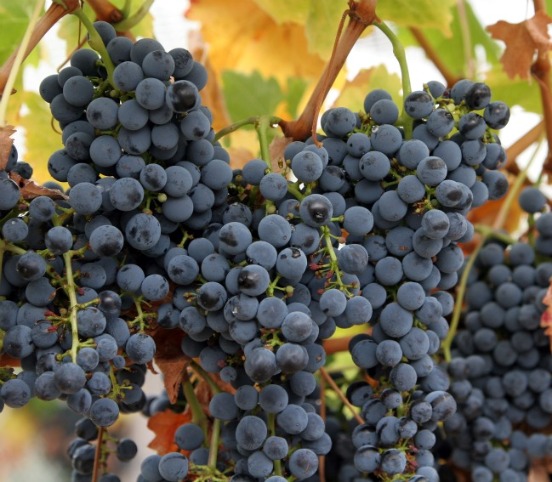
How climate is adversely affecting various species of grapes that only have a range of a few degrees to produce optimum quality wines. Read more By Alasdair Cross for BBC at this link: http://www.bbc.co.uk/news/science-environment-11573553
How climate is adversely affecting various species of grapes that only have a range of a few degrees to produce optimum quality wines. Read more By Alasdair Cross for BBC at this link: http://www.bbc.co.uk/news/science-environment-11573553

Barramundi
A few decades ago when aqua-culturists began sifting through fish to raise, species were chosen on the basis of their value in the marketplace and not on the amount of fish or fish meal they would have to be fed before they reached maturity, or the mess and pollution the process would cause to the surrounding waters, or their general environmental unfriendliness.
Enter the Barramundi, from Southeast Asia and Northern Australia, a delicious, firm white-fleshed fish similar to grouper, snapper, or striped bass. Barramundi are born in the sea and migrate to fresh waters as adults, the absolute reverse of a salmon’s life cycle, and they have the rare ability to transform vegetarian feed into healthy omega-3 at about the same rate as a coho salmon. In terms of pure common sense, why would anyone choose to farm Atlantic salmon, a carnivorous predator that needs to eat many times its own weight in smaller fish? Barramundi are found ideal for farming because of their fast-growing and hardy nature. They spawn in saltwater, but they can be grown in varied environments including fresh, salt or brackish water. Because they can be farmed in closed, land-locked systems and due of their low dependence on fish-based diet, they are considered a more environmentally friendly fish to grow, particularly in comparison with salmon, which depend largely on fish meal for their diet. In addition, at least in the U.S., they are raised naturally. That is, without the aid of hormones or antibiotics.
Joshua Goldman, the CEO of Australis Aquaculture is attempting to undo sustainable fish farming gone wrong. After raising tilapia and striped bass in the 1990s, he searched for the optimum fish to farm and with Australian entrepreneur Stewart Graham they chose the barramundi. Australis operates the largest recirculating aquaculture operation in the world near an airport in Turners Falls, a village in western Massachusetts’s Pioneer Valley. They clean the water in a treatment plant and send it back to the fish and every gallon used is recycled 300 times. Solid waste is separated out and goes to local farms as fertilizer. This is a far better solution than the “net pens” used today that not only pollute the sea, but spread diseases and parasites to passing wild fish.
The bottom-line message: Eat barramundi NOT salmon and help save the seas!
 Lot 3186-3187, Lot 16 KCLD, Jalan Lapangan Terbang Baru, Kuching 93350 • Malaysia
• Phone: +60 82 280888 • Fax: +60 82 280111 • Email: kuching@fourpoints.com
Lot 3186-3187, Lot 16 KCLD, Jalan Lapangan Terbang Baru, Kuching 93350 • Malaysia
• Phone: +60 82 280888 • Fax: +60 82 280111 • Email: kuching@fourpoints.com
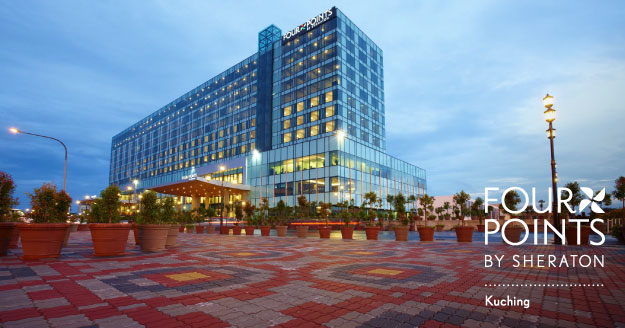
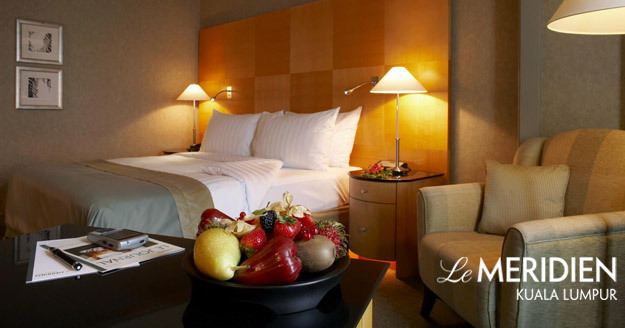
Welcome to Kuching’s newest International hotel, the Four Points by Sheraton Kuching. Located just two kilometres from the airport and 15 minutes from the heart of the city, and easy access to all this fascinating and dynamic destination has to offer. Casual, uncomplicated with 421 rooms and suites.
 Frog Poaching Goa
People living in the area of Goa in India are known for their love of meat, and now that it is the annual monsoon rainy season with frogs awakening from their long hibernation, poaching is in full swing, because catching them legally was banned in the eighties. As in France, they are highly prized for the table; in Goa they are eaten sauteed, or as minced escalopes, and in curries.
In spite of increased poaching their numbers have remained stable with the main threat to the amphibians being the destruction of their natural habitat.
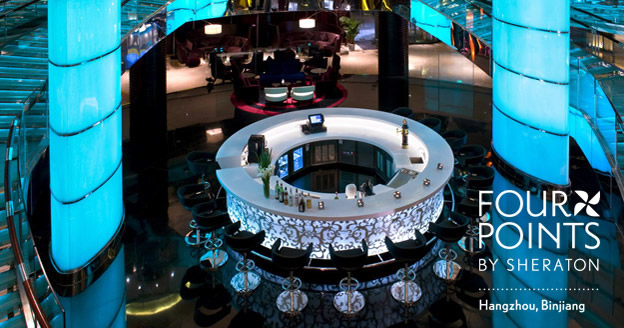 868 Dongxin Avenue, Binjiang District Zhejiang 310053 • China
Phone: +86 571 2887 8888 • Fax: +86 571 2887 8887 • Email: fourpoints.hangzhou@fourpoints.com
868 Dongxin Avenue, Binjiang District Zhejiang 310053 • China
Phone: +86 571 2887 8888 • Fax: +86 571 2887 8887 • Email: fourpoints.hangzhou@fourpoints.com
Overlooking the Qian Tang River in Hangzhou, Four Points by Sheraton Hangzhou, Binjiang is located in the exciting new hi-tech development zone with easy access to downtown, city attractions and the airport. The stylish, relaxing guest rooms and suites have everything you need for a great stay: a flat screen LCD TV, rainforest shower, Four Points by Sheraton Four Comfort Bed, and free High Speed Internet Access. Four Points by Sheraton Hangzhou, Binjiang is great for either a business trip or a weekend getaway.
 Venetian Seafood Buffet with free flow Prosecco
Le Méridien Kuala Lumpur
Relax the true Italian way on a warm and breezy Sunday afternoon. Indulge in jumbo prawns, oysters, lobsters and many more treasures from the sea. All complemented with free flow Prosecco. Join us for an amazing Sunday afternoon with family and friends!
RM 108++ per person or RM 168++ per person inclusive of free flow Prosecco
Valid from 1 July – 30 September 2010
For reservations call +603 2263 7434 or e-mail dining.lmkl@lemeridien.com
 Buka Puasa – Discover limitless Ramadhan delights.
Le Méridien Kuala Lumpur
Discover limitless Ramadhan specialties from sizzling seafood hotplate to Mongolian beef ribs and of course spiced beef rendang.
Kurma juice, teh tarik, sugar cane, sirap bandung and soya bean serve as thirst quenchers, while divine desserts bring a sweet ending to a wholesome meal.
Latest Recipe : RM 118++ (adult) RM 59++ (child)
Patio: RM 108++ (adult) RM 54++ (child)
Arranging for a private event?
With a minimum of 50 people, you can connect with family, friends or business associates at the Sultan’s Ballroom, Grand Salon or Petit Salon for:
RM 150++ (adult) RM 74++ (child)
To discover more, call 603 2263 7769 or e-mail : mimi.zarina@lemeridien.com
For reservations, visit www.lemeridien.com/kualalumpurdining, call +603 2263 7434 or e-mail dining.lmkl@lemeridien.com
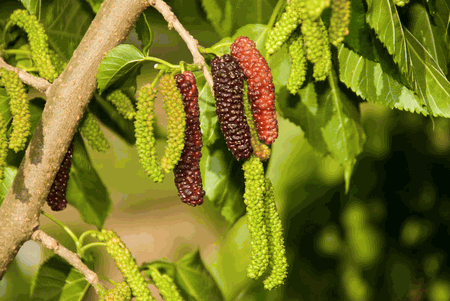 Morus alba Pakistani “the king of the mulberry trees”
This type of mulberry tree grows to a height of 50′ or more, and their 4″ long fruit is spectacular. Make sure to eat only ripe fruit unless you want a seriously puckered mouth, it ripens and is ready in early summer. The fruit blends sweet with tart in a complex berry flavor that reminds some of a “super” raspberry. The tree requires full sun, moderate summer water. Does not stain to the extent of other mulberries. Some reports of successful growth in zone 6, but a reliable grower for zones 7-10.
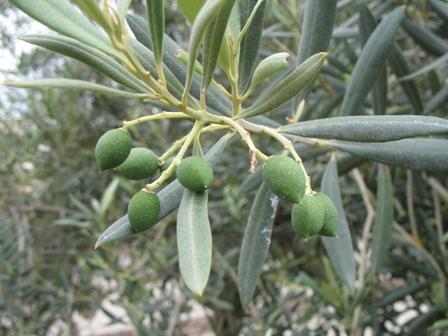 Green olives on the tree
All olive trees produce both green or black olives, the color depends on when they are picked. Green olives are the unripened fruit that are picked before they ripen, black olives are the fully ripened fruit.
The health and therapeutic benefits of olive oil were first mentioned by Hippocrates, the father of medicine. For centuries, the nutritional, cosmetic and medicinal benefits of olive oil have been recognized by the people of the Mediterranean.
Olive oil was used to maintain skin and muscle suppleness, heal abrasions, and soothe the burning and drying effects of sun and water. Olive oil was administered both internally, and externally – for health and beauty.
Recent research has now provided firm proof that a Mediterranean diet, which includes olive oil, is not only generally healthy, but that consuming olive oil can actually help lower harmful LDL cholesterol. Olive oil contains antioxidants that discourage artery clogging and chronic diseases, including cancer.
There are three kinds of dietary fats: saturated (animal), polyunsaturated (plants, seeds, nuts, vegetable oils), and monounsaturated (olive oil). From a nutritional standpoint, all types of olive oil are approximately the same, with 80% monounsaturated, 14% saturated, 9% polyunsaturated fats on average.
Olive oil is rich in vitamins A, B-1, B-2, C, D, E and K and in iron. Olive oil, which is beneficial to the digestive system, does not necessarily keep you thin; it contains just as many calories as other oils (9cal/g).
Olive oil acts as a mild laxative, is a friend to the intestine and an enemy of ulcers and gastritis. Olive oil is a good tonic, with specific benefits for people suffering from heart disease.
Olive oil has been regarded as the “beauty oil”. The body’s cells incorporate the valuable fatty acids from the oil, making arteries more supple and skin more lustrous. The amount of oleic acid in olive oil is about the same as that found in a mother’s milk and is thus the best growth supplement for infants.
Drunk before a meal, olive oil protects the stomach from ulcers. If a spoon or two is taken with lemon or coffee, it prevents constipation without irritating the intestinal tract. It is also effective in treating urinary tract infections and gall bladder problems. It is a perfect remedy for gastritis in children, it accelerates brain development and strengthens the bones. Olive oil dissolves clots in capillaries, has been found to lower the degree of absorption of edible fats, and consequently slows down the aging process.
Only animal-derived foods contain cholesterol. Olive oil is cholesterol-free. Cholesterol is not entirely harmful; it is an essential building block for cell membranes, nerve fiber coverings, vitamin D and sex hormones. The body manufactures all the cholesterol it needs, so any cholesterol in foods we eat is excessive. Excess cholesterol causes a gradual accumulation of fatty deposits and connective tissue, known as plaque, along the walls of blood vessels. Eventually, plaque builds up, narrows the arteries and reduces blood flow, in this way increasing the risk of heart attacks and strokes.
Cholesterol is manufactured in the liver and is vital for the structure of cell walls. In order to circulate through the bloodstream, it is “packaged” in fatty-protein wrappings called “lipoproteins”. The low-density lipoproteins (LDL) distribute cholesterol throughout the body, dropping it off where needed. The liver also packages another type of cholesterol called high-density lipoproteins (HDL), which picks-up circulating cholesterol and returns it to the liver for reprocessing, or excretion. The LDLs are the ones that build up the walls of the arteries and so are tagged “bad” cholesterol. HDLs carry cholesterol away. So the more HDLs there are, the easier it is to unblock paths and rid the body of unwanted cholesterol. What the body really needs is a good HDL/LDL ratio. Polyunsaturated oils lower LDL (“bad”) and HDL (“good”) levels. Monounsaturated oils (such as olive oil), lower only LDL cholesterol, leaving HDLs to help clean out arteries.
Animal fats, which contain saturated fatty acids, exponentially increase blood cholesterol levels. Polyunsaturated fatty acids lower both LDL and HDL levels in the blood, but they do not affect their ratio. Monounsaturated fatty acids on the other hand control LDL levels while raising HDL levels. No other naturally produced oil has as large an amount of monounsaturated fatty acids as olive oil, which mainly contains oleic acid. The modest amount of well-balanced polyunsaturated fatty acids in olive oil is well protected by antioxidant substances. It is widely believed that antioxidant substances such as vitamins E, K and polyphenols found in olive oil provide a defense mechanism that delays aging and prevents carcinogenesis, therosclerosis, liver disorders and inflammations.
Since olive oil is not tortured during extraction, these substances are left unspoiled, making the olive oil very stable even when frying. So contrary to common belief, olive oil undergoes a smaller degree of deterioration during frying than other oils.
Due to its chemical structure, olive oil is of unrivaled organoleptic value and thus the oil best suited for human consumption. It is very well tolerated by the stomach. In fact, its protective function has a beneficial effect on gastritis and ulcers. It is a cholagogue, activating the secretion of pancreatic hormones and bile much more naturally than prescribed drugs. Consequently, it lowers the incidence of cholelithiasis (gallstone formation). Its excellent digestibility promotes the overall absorption of nutrients, especially vitamins and mineral salts. It has a positive effect on constipation. Bones need a large amount of oleates and what source could be better than olive oil? Promoting bone mineralisation, it is excellent for infants and the elderly who have bone calcification problems. It also has beneficial effects on brain and nervous system development as well as on overall growth. It shields the body against infection and helps in the healing of tissues, internal and external. Olive oil is a panacea, the perfect oil for all ages.

The Asian “Miele Guide” was quickly created this year, owing to the continual bad showing of Asian restaurants in the San Pellegrino “World’s 50 Best Restaurants” runoff, held annually in London. Miele, in case you wondered, is a German-based company that produces household appliances for the German domestic market.
This year, for example, Miele’s No. 1 scoring restaurant Singapore based, Iggy’s at the Regent Hotel placed a lowly 77th on the San Pellegrino list of winning restaurants. It seems to me, that this entire exercise, if not a really last-ditch stand, is at least a bit embarrassing. In any case, following is the list of Asian restaurants picked by Miele as the 20 Best Asian Restaurants:
1. Iggy’s, Singapore.
2. L’Atelier de Joel Robuchon, Hong Kong.
3. Les Amis, Singapore.
4. Gunther’s, Singapore.
5. Mozaic, Ubud, Bali, Indonesia.
6. Robuchon a Galera, Macau, China.
7. Garibaldi, Singapore.
8. Yung Kee, Hong Kong.
9. Hutong, Hong Kong.
10. Antonio’s Fine Dining, Tagaytay, Philippines.
11. Caprice, Hong Kong.
12. Zuma, Hong Kong.
13. L’Atelier de Joel Robuchon, Tokyo.
14. Bukhara, New Delhi.
15. Grissini, Hong Kong.
16. Nobu, Hong Kong.
17. M on the Bund, Shanghai.
18. Fook Lam Moon, Hong Kong.
19. Zanotti, Bangkok.
20. Kyubey, Tokyo.

NIKKI BEACH KOH SAMUI
96/3 Moo 2 Lipa Noi, Koh Samui, Surat Thani, Thailand 84140 • +66 (0) 77 914 500
www.nikkibeach.com/kohsamui
Bakery Café:
Everyday 9am-6pm
Restaurant:
Sunday – Wednesday 11am – 9:30pm
Thursday – Saturday 11am – 10:30pm
Sunday Brunch 11am – 4pm/ A la Carte 4pm – 9:30 pm
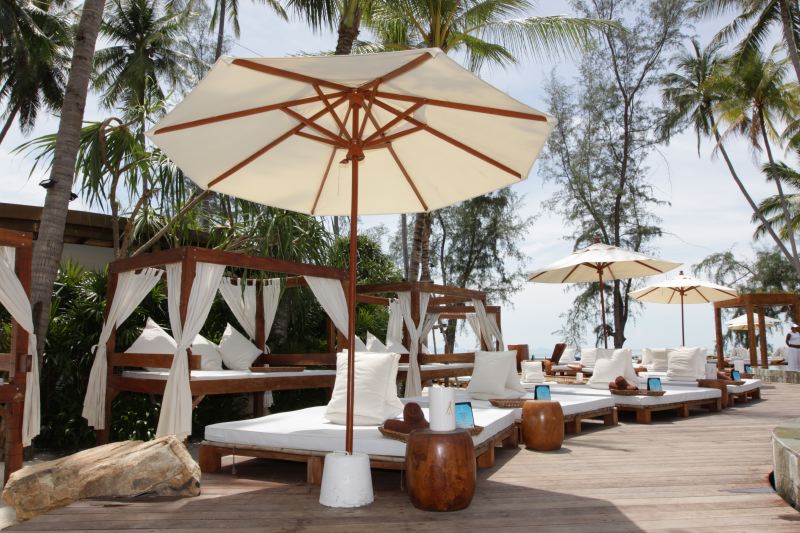
In April of 2009, Nikki Beach opened on the island of Samui on Nipa Loi Beach, in the Gulf of Thailand, and in true Nikki fashion, threw a gala “White Party”. Koh Samui’s version of now world-famed Nikki Beach was ready to introduce their brand of “beach party time” to Thailand, in spite of a deep global recession and dwindling tourist activity.