Lenôtre Cafes & Shops – Bangkok

December 1st, 2008

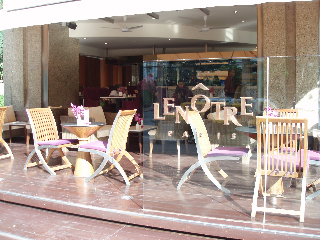
Lenôtre Langsuan
Tel. +66 2250-7050 to 1
Lenôtre Siam Paragon
Tel. +66 2129-4365
Lenôtre Thonglor
Tel. +66 2382-0063
Lenôtre Sofitel Silom
Tel. +66 2238-1991
Opening Hours: throughout the day and until 10pm daily
Credit Cads: All Major
Prices: Moderate-Expensive

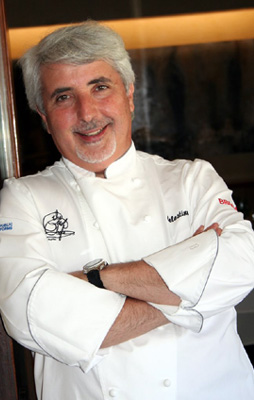
Philippe Chanut, Executive Pastry Chef Lenôtre Bangkok makes a large variety of exquisite pastries throughout the day to supply the four outlets currently operating in Bangkok. The cuisine has its ups and downs, although if you order carefully many dishes can be quite good and the staff is usually very concerned about the quality.
The pastries are always good even though the sugar level is a little too high for my palate however, this is Thailand and things have to be extra sweet to be acceptable for the Thai taste.

Bastide – Closed Again! – Los Angeles

December 1st, 2008

Joe Pytka has closed down his restaurant Bastide located in West Hollywood, once again. That is the direction it has been drifting since Chef Alain Giraud left in 2004 and its last closing not long ago. He may have another revival, although I think not. I feel sorry that this had to happen as Mr. Pytka really appreciates good food and excellent wines; he may now have to quaff his expensive Grand Cru wines in someone else’s restaurant, at least for the moment.

Chaya Brasserie, New Venue Downtown – Los Angeles

December 1st, 2008

Chaya Downtown LAAbove: Chaya Downtown

525 S Flower St
Los Angeles, CA 90071-2200
Tel. 213-236-9577
Website: www.thechaya.com/downtownlosangeles/

Chaya BrasserieAbove: Chaya Brasserie Los Angeles

8741 Alden Drive, Los Angeles, CA 90048
tel: 310.859.8833
Credit Cards: Amex, Visa, MC
Prices: Expensive

Chaya Venice
110 Navy Street, Venice, CA 90291
tel: 310.396.1179
Credit Cards: Amex, Visa, MC
Prices: Moderate-Expensive

Chaya Brasserie San Francisco
132 The Embarcadero, San Francisco, CA 94105
tel: 415.777.8688
Monday-Friday Lunch: 11:30am-2:30pm
Monday-Thursday Dinner: 6:00pm-10:30pm
Friday-Saturday Dinner: 6:00pm-11:00pm
Sunday Dinner: 6:00pm-10:00pm
Brunch served every weekend
Saturday 11:00am-2:30pm
Sunday 11:00am-3:00pm.
Credit Cards: MC, Visa
Prices: Moderate-Expensive

I met Yuji Tsunoda, owner of Chaya Group, for the first time when he came to my restaurant, Au Petit Cafe, for dinner with Hoki Miller in the 1980’s, shortly before he started planning his first venture in the restaurant business in Los Angeles, a place called La Petit Chaya. After this restaurant had opened successfully he started construction on Chaya Brasserie in West Hollywood off of Robertson Blvd., which since its inception has always been a fashionable spot to dine and have cocktails in the early evening, featuring one of the best Happy Hours in town. Later, they launched the ever-popular Chaya Venice, an all time favorite of mine, also with a great Happy Hour offering sushi rolls at very good prices and the drinks are extremely well-made. Ask for Tim, one of the capable bartenders, although his schedule is becoming shorter every year, and I am afraid that one day he will not be working at all. He makes the meanest Margarita in town, know-how that he brought with him from The West Beach Cafe and Rebecca’s where he worked years ago.

Yuki Tsunoda, also controls the franchise on all Starbucks in Tokyo, and employed the very clever marketing technique of placing each new Starbucks Coffee Shop as close as possible to its strongest competitor Doutor Coffee Houses, is scheduled to launch Chaya Brasserie, the Chaya Restaurant Group’s third Los Angeles-area restaurant, early next year downtown. However, the new Chaya will offer a broader menu, including more moderately priced pasta dishes and options for bar dining, said Lawrence Moore, Chaya’s director of marketing.

The original Chaya Brasserie will go through a face lift and entrées will be adjusted in range from $15 to $33 to combat the flagging economy. The group also plans to open its third M Cafe, a macrobiotic concept, in Beverly Hills early next year.

Executive Chef Shigefumi Tachibe is in charge, who first introduced Los Angeles to Franco-Japonaise cooking at the legendary La Petit Chaya in the 1980s and is famed for his distinctive renditions of East/West cuisine.

Drago Centro Restaurant – Los Angeles

November 29th, 2008


525 South Flower Street, Suite #120, Los Angeles, CA 90071
Tel. 213-228-8998
Fax: 213.228.0028
Website: http://www.dragocentro.com
Credit Cards: All major
Prices: Expensive

Celestino Drago’s new Drago Centro Restaurant opened in downtown Los Angeles, at City National Plaza and opened officially on Tuesday December 2, 2008. The restaurant is now open and has received rave reviews not only for their highly acclaimed cuisine and accomodating service staff but have also received customer satisfaction with the cutting edge and yet comfortable surroundings. Following are the sample menus:

menu degustazione

six course tasting menu  75

beverage pairings  40

fiori di zucca
squash blossoms, ricotta, balsamic vinaigrette

pra soave, classico, veneto  2007

agnolotti
corn & ricotta agnolotti, summer truffles

feudi della medusa, vermentino, albithia, sardenga 2006

ippoglosso
alaskan halibut, grapes, almonds

castello di ama, sangiovese rosato, toscana  2007

anatra
duck, foie gras, cherry tomato
gulfi, nero d’avola, nerojbleo, sicilia  2005

guanciale di vitella
veal cheeks, fava bean risotto

grifalco lucania, aglianico del vulture 2004

panino di cioccolata
hazelnut ganache, bananas, bacon, brown sugar gelato

rooibos zaya

antipasti

per cominciare “to begin”

la burrata 13
burrata, tomatoes, olive oil, crostino

il fegato d’anatra 16
foie gras crème caramel, arugula puree

il carpaccio di langostino 18
langoustine carpaccio, blackberries, micro herbs, citrus dressing

le cozze n’pepate  13
sautéed mussels, cracked black pepper, olive oil, garlic, lemon

il carpaccio di capriolo 16
venison carpaccio, walnuts, sherry vinaigrette

il tagliere di affettati con gnocco fritto 16
house selection of charcuterie, gnocco modena style

la zuppa 10
tuscan green lentil soup

le insalate “the salads”

i carciofi 15
grilled artichoke, belgian endive, candied pistachios, evoo sabayon

le verdure e lattughe novelle 14
assorted baby vegetables, young lettuces, white balsamic vinegar

le lattughe miste 10
mixed baby lettuces, red onions, brioche crisp, lemon vinaigrette

la panzanella di bietole 14
market beets, focaccia croutons, baby spinach, truffle pecorino

primi piatti

le paste all’ uovo “fresh egg pasta”

gli spaghetti alla chitarra con pesto alla trapanese 18
basil spaghetti, tomato-almond pesto

le fettuccine all’aragosta, stile carbonara 29
fettuccine, lobster, espelette crème, “carbonara style”

le pappardelle al fagiano 19
pappardelle, roasted pheasant, morel mushrooms

i cavatelli di ricotta e spinaci  17
house made spinach ricotta cavatelli, venison-mushrooms ragout

le paste di grano duro “hard durum wheat pasta”

i paccheri 20
paccheri, spot prawns, puttanesca sauce

i rigatoni all’amatriciana 17
rigatoni, smoked pork jowl, onions, tomatoes, pecorino

i pizzoccheri della valtellina 18
buckwheat pasta, cabbage, potatoes, fontina, sage cream

i garganelli 17
garganelli, pork sausage, parmesan, fennel seeds

e paste ripiene e al forno “filled and baked pasta”

i cannelloni di piselli 17
bufala ricotta cannelloni, peas, almond butter

i ravioli al gusto di coda alla vaccinara 18
oxtail ravioli vaccinara style, celery root, broth

lasagna di vegetali 17
grilled vegetable lasagne, bechamel

i risotti “italian rice dish”

il risotto “vialone nano” con finferli e gorgonzola 19
risotto, wild mushrooms, gorgonzola

il risotto “vialone nano” con barbabietole rosse e gamberi 18

il risotto “arborio” al salto con ragu’di polpo e aglio orsino 19
crispy risotto cake, octopus, young garlic sauce

secondi piatti

i pesci “fish”

l’ ippoglosso con piselli 30
alaskan halibut, peas, salsify, cherry tomatoes

il branzino 33
branzino, cioppino broth, shellfish

la trota salmonata 30
ocean trout, asparagus, tomatoes, salsa piccante

le carni “meat”

la quaglia 29
focaccia stuffed quail, cannellini beans

la lombatina di vitella 36
grilled veal, sweetbreads, green lentil ragout

l’osso buco d’agnello 29
lamb ossobuco, hazelnut rosemary gnocchi, fava beans

il pollo ruspante 27
truffle crusted chicken breast, forest mushrooms

la bistecca di bue piemontese 37
piedmontese ny steak, fingerling potatoes, basil crème

la bistecca “piemontese” per due, con zabaione di bagna cauda 80
grilled piedmontese porterhouse for two, panelle fries, mushrooms

chef: celestino drago              chef di cucina: ian gresik

direttore: matteo ferdinandi

a service charge of 20 % will be included on parties of six or more
They will feature an Enomatic Wine System, an automated and improved version of the first rudimentary system,  introduced to the United States by the original Cruvinet Company in Santa Monica in 1980 not to be confused with the cheaply built knock-off in existence today. The original design was patented by Jacques Foures in Bordeaux, France in the late 1970’s. I am so pleased that the original system that has now been automated and vastly improved through new technology will have a new resurgence. I think that the time is right for wine lovers to finally understand how useful this device can be, to preserve wines and dispense them by the glass without spoilage, as if they had never been opened.
Langan’s Brasserie – London

November 28th, 2008

Above: a rare copy of the menu heading for Langan’s Brasserie in Century City, Los Angeles

Peter Langan was on the loose in Los Angeles when I was introduced to him, partly because his partners chef, Richard Sheperd and actor, Michael Caine found it more convenient to have Peter absent from London’s Langan’s Brasserie rather than under a table biting Princess Margaret’s leg and causing other disruptions. He was about to sign a really unfavorable lease agreement with the Beverly Center for the corner of the ground floor on LaCienega and Beverly Boulevards, which I managed to persuade him to abandon.

The caricature of Peter Langan on the menu of Langan’s Brasserie in Century City followed the style of the Langan’s London menu however, the operation in Los Angeles unfortunately for everyone, fell under the control of a partner and former New York garment district trader who knew absolutely nothing about running a restaurant and Peter was banned from entering the restaurant from the day of its opening. It was doomed to failure; as it was run in the style of a boutique restaurant rather than the inexpensive 600 seat brasserie that Peter had envisioned, where taxi drivers and film biz people would dine together, albeit in different sections the demarcations unknown to the general public.

I dined with friends a few times at Langan’s Brasserie on Stratton Street just off Piccadilly previous to meeting Peter in Los Angeles. When invited there on Peter’s request after we met, I moved along with him from one table to the next where he continued to open bottle after bottle of either Krug Prestige Cuvée or Laurent Perrier Grand Siecle, nursing a glass for awhile while chatting, and then moving on to another table where finally he had a tally of almost as many bottles open, as there were tables in the section near the bar. The walls, filled with works by David Hockney, whom Peter referred to, in the most sincere way as both were good friends, as “the house painter”. Patrick Procktor, another artist who was a close friend, painted a mural of Venice on the walls of the first floor Venetian Room. At Odins, another restaurant in the Langan’s stable, and as Peter often told me, “the restaurant with the best food” was filled with art that Peter had bartered, canvases in exchange for food and drink over the years.

There are so many stories to tell working with this eccentric character and certainly way too many for this post. I may be writing about a few of the more amusing experiences, at some point in the future in these pages, although at the time they were hardly considered as such.

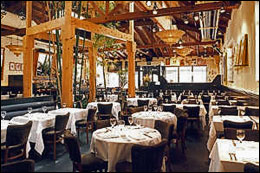
Below: the main dining room downstairs at Langan’s Brasserie on Stratton Street, London

Jewel-Box Restaurants of Japan

November 25th, 2008

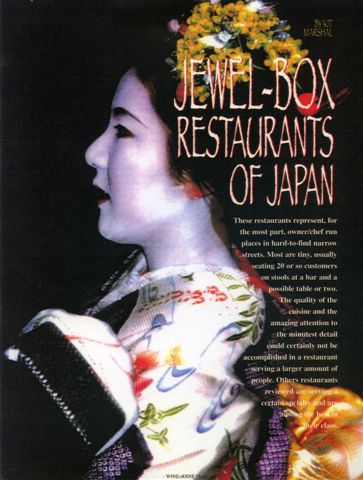
Pictured above is the Cover Page of an article I wrote for Wine & Dine Magazine featuring this photo of a Miko Girl in Kyoto. The shot was very difficult to obtain as these young girls, in training to be Geisha Girls, do not like to be photographed, though my Japanese wife was insistent on capturing this photo and had to chase her down the street to take it.

These restaurants represent, for the most part, owner/chef run places in hard-to-find narrow streets. Most are tiny, usually seating 20 or so customers on stools at a counter-bar and a possible table or two.
The quality of the cuisine and the amazing attention to the minutest detail could certainly not be accomplished in a restaurant serving a greater amount of people. Other restaurants included are serving certain specialties and are among the best of their class. About a third of the establishments originally included have gone out of business and have been eliminated from this update. Note: The magazine’s editor had space constrictions and severely edited the text.

Steak House Hama
7-2-10 Roppongi, Minata-ku, Tokyo
Tel. (03) 3403-1717
Opening Hours: Lunch Noon-2:30pm
Credit Cards: All Major
Prices: Very Expensive
(other branches around the city)

A handsome interior with highly lacquered chairs that are more suitable to a company board room. These steak restaurants serve high-quality produce at extremely expensive prices; they mainly cater to show biz personalities and business moguls on expense accounts.
Stainless steel flattop grills trimmed in brass and fine woods are a far cry from Benihana of Tokyo, the laughable chain of comical grill men that try to entertain the masses in the U.S. One steak is a minimum of $100, foie gras $40.00, rice with garlic a mere $12, a simple Macon Village White Burgundy $70.00 and corkage charge $50.00 a bottle. (expect that these prices may have doubled as these prices were valid a few years ago).

Le Recamier
2-3, Moto Azabu 3-chome, Minato-ku, Tokyo, 106-0046
Tel. (03) 3408-5044
Opening Hours: Lunch:11:30am-2pm; Dinner: 5:30pm-10pm
Credit Cards: All Major
Prices: Moderate-Expensive

This restaurant is named after the time-honored hangout for journalists in Paris, on the quiet rue Recamier. A former chef now cooks seasonal specialties in Tokyo. The cuisine is top rate and the prices are well below other spots of the same caliber.

Queen Alice
3-2-3, Mooto-Azabu, Minato-Ku, Tokyo 106
Tel. (03) 3402 9039
Opening Hours: Lunch:11:30am-2pm; Dinner: 5:30pm-10pm
Credit Cards: All Major
Prices: Moderate-Expensive

This Picturesque restaurant has several nicely appointed rooms, all are crammed with tables and chairs to the absolute maximum, to shift your chair even a few centimeters from the table you might restrict the movement of the waiters. A solarium tucked away at the back of the restaurant is pleasant enough, especially at lunch on a gloomy day. The praiseworthy French cuisine is complimented by a well-stocked wine cellar.

Cafe La Boheme
Minami-Aoyama
1 Fl. Kaneko Bldg. 7-11-4 Minami-Aoyama, Minato-Ku
Tel. (03) 3499-3377
Opening Hours: 11:30am-5am
Credit Cards: All Major
Prices: Moderate

Cafe La Boheme is one of eight moderately priced little bistros located around Tokyo. the cooking is quite good considering the prices that are dirt-cheap by Tokyo standards. Two can dine here with a carafe of white and a carafe of red wine for $50. Salads, pasta and the special Japanese pastas are good. The restaurant in Aoyama is very nice-looking and draws and interesting crowd until 5am in the morning. I commend this restaurant chain for their efforts and I wish that every city in the world should aspire to have comparable restaurants open most of the day and night, serving good food and wine at reasonable prices.

Yoshihashi
Tel. (03) 31129 4129
Minato-Ku Moto Akasaka 1-5-25
Opening Hours: Lunch:11:30am-2pm; Dinner: 5:30pm-10pm
Credit Cards: MC, Visa
Prices: Very Expensive
Sukiyaki

A small, charming place serving Sukiyaki. Everything is cooked separately in front of you. An egg wash is made by painstakingly beating the whites with chopsticks while avoiding breaking the yolk that rests in the center. The resulting bowl is fluffy whites around a yellow yolk moon in the center where you dip the Sukiyaki. A difficult task, I can tell you, as I tried to do it and made a mess. There is a comfortable little bar if you wander down the little path that leads to the back of the restaurant.

Daini’s Table
6-3-14 Minami-Aoyama, Minata-Ku
Tel. (03) 3407-0363
Opening Hours: Lunch: 11:30am-2pm; Dinner: 5:30pm-10pm
Credit Cards: All Major
Prices: Expensive

This small space is decorated in tones of lacquered dark green and striking Chinese red. The bar is red and the tables green. Exquisite antique kimonos are inset into recessed spaces in the walls and are protected by glass. The kitchen of this small restaurant puts out quality Chinese cuisine in French-style courses rather than all at one time as is customarily Chinese.

Vermouth Cassis Recipe – Au Petit Café – Hollywood, CA

November 25th, 2008

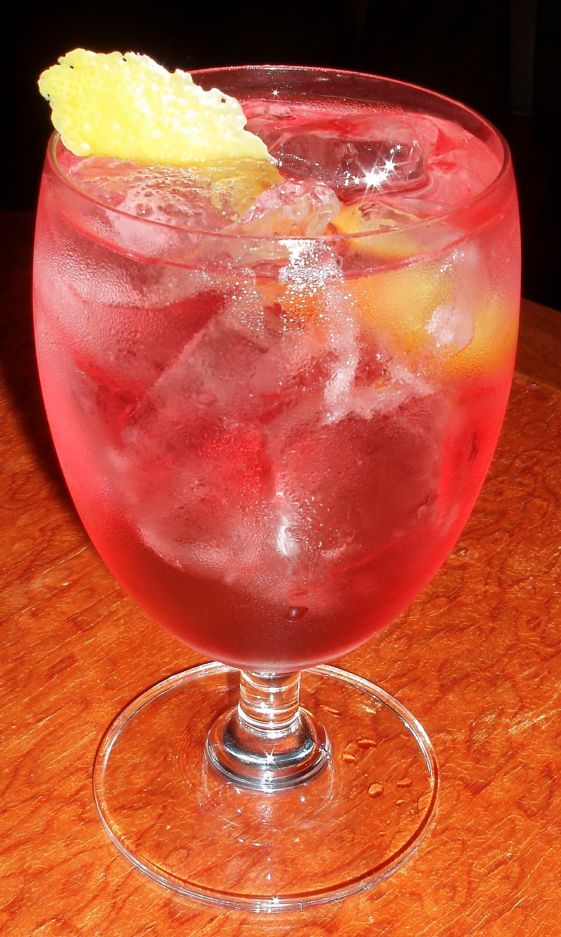
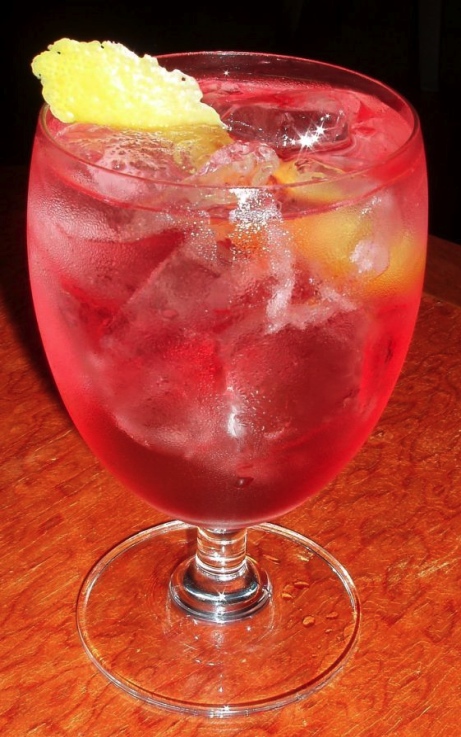
This is the recipe for the famous aperitif Vermouth Cassis that Au Petit Café in Hollywood introduced to the United States in 1963; previous to this recipe and even today there are other versions of the aperitif that use Creme de Cassis instead of Sirop de Cassis however, this changes the taste of the drink completely. As a matter of interest we boosted the sales of Cinzano Dry Vermouth to spectacular levels as we were ordering at least 10 cases or more of it every month. The national distributor was so amazed, as before we introduced this drink, they were lucky to sell one bottle per restaurant every six months as only a drop or two was used for the Dry Martini Cocktail. Au Petit Café was the largest consumer of the dry vermouth in the country. With all the clones of Au Petit Café the distributor was doing very good business, so much so, that they printed our recipe on the back of the bottle in those days so that others would follow.
Although the recipe is very simple, as with most things, it is the ingredients and little details that make the difference. When I first opened Au Petit Cafe in the early 60’s, I used the Cinzano Dry Vermouth imported from Italy, until I found during the 70’s that it just did not not taste the same, after close inspection of the bottle I found (in very small print) that they were now making the product in California. So then the job of tasting every vermouth available on the market began and I settled on Noilly Prat Dry Vermouth (made in France), it was the closest in taste to the original Cinzano (made in Italy) but not exactly the same, in any case, I changed to that brand. The next ingredient is the Cassis and probably the most important. You must use the Sirop de Cassis that is lighter and does NOT contain alcohol; Creme de Cassis does contains alcohol and gives the drink a stronger, more concentrated flavor. I am using Monin (black currant syrup) from Dijon in Bangkok. Of course, I could only find the Creme de Cassis here, so I found the Monin Sirop in Tokyo and I hand carry it back. As long as you use a Sirop de Cassis from Dijon, France you will be all right.

Preparing the Vermouth Cassis:

1. Use small ice cubes or cracked ice not large cubes (I am using the clear ice cubes from Mt. Fuji, Japan)
2. Peel the yellow skin from a lemon, being careful to eliminate the white pith, by using a potato peeler, and with one stroke peel from the top to the bottom of the lemon and you will wind up with one strip about three inches long.
3. Pour the Cassis Syrup into the vermouth (use Cinzano or Martini Dry Vermouth from Italy or Noilly Prat from France) until a pink color is achieved and stir well to mix the ingredients (the color should not be too pale and not too red it must be PINK)
4. You will then take the lemon strip and with two hands squeeze it lengthwise with the outer side facing downwards into the glass to extract the oil from the lemon into the Cassis & Vermouth mixture and then drop it into the drink.

Bed Supper Club – Bangkok

November 23rd, 2008

26 Soi 11
Tel. 02-651-3537
Opening Hours: Mon-Fri 7:30pm-midnight and until 1am on weekends
Dress Code: No shorts, sandals for men
Web site: www.bedsupperclub.com
Credit Cards: All Major
Prices: Moderate-Expensive
Set menu 1,250B-1,600B

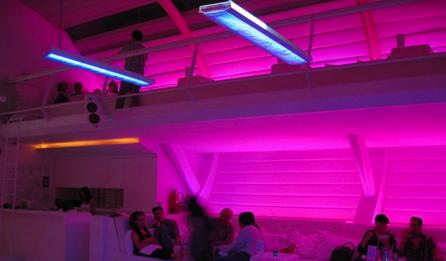
If you can tolerate Asian-Med fusion food, and do not mind to dine in a most uncomfortable position while prone in a bed, you might find Bed one of the trendiest places in town, I personal despise it!  The decor is industrial style tubular, interspersed with neon lighting and throbbing repetitive sounds. The small adjacent disco is always jammed.

Baron Enrico di Portanova

November 23rd, 2008


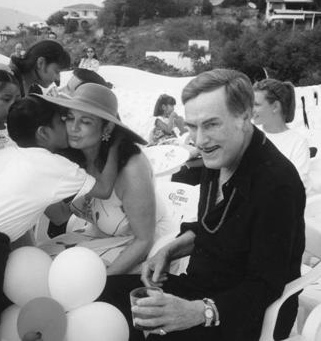
“Alright everyone, you can all come up on deck now, we’re the biggest!”  Called out Baron Ricky di Portonova, as the yacht S. S. Miranda pulled into the port of Monte Carlo to bring aboard caviar and Champagne from a local supplier. Ricky, the heir to an enormous Texas oil fortune from his grandfather, oil wildcatter Hugh Roy Cullen, on his mothers side and what some people have called a “purchased” Italian Baronial title from his charming, father, Paulo di Portanova. Traveling in what he called his “taxi” a Lear jet he called the “Barefoot Baronessa” between homes in Houston, Rome and a fabulous villa in Acapulco called “Arabesque” that was protected by a small army of machine-gun toting guards in towers, and featured an indoor waterfall and 28 bedrooms.

The yacht, the S.S. Miranda with 27 in crew and only 6 of us aboard chartered by Ricky and calling on various ports around the Mediterranean for the months of July and August.  Guests aboard included Ricky’s girlfriend Sandra Hovis who later became his wife, Dee Hay from England, Patsy de Rothschild from Basil, Switzerland, and Ricky’s friend Eddie and his girlfriend along with my wife and I.  Ricky had sacked the ships English cook and replaced him with one of the Rothschild’s French chefs.  He immediately intimidated him by complaining that the lamb was too rare and it also turned out that this poor chef suffered from seasickness. After stocking up with many kilos of caviar in Monte Carlo he inflicting a couple of his favorite dishes almost every night—a baked potato filled to overflowing with Beluga caviar or fettuccine tossed with great quantities of caviar; who would complain? The latter dish years later made it onto the then tired menu of Tony’s Restaurant in Houston. Tagliatelle Portanova!

I first met Ricky in Capri after hearing a booming voice shout out, “Where is the Christian section?”, as he moved across the crowded terrace of the Quisisana Hotel, turning heads as he authoritatively pushed through.  He sat down at the next table with a large party of friends including a pal of his by the name of Eddie who had recently lost his leg in the crash of his Ferrari.  Presumably, other parts were lost as well as he was an embittered man, who carried a cane with a sword in it – he was always waiting for any opportunity to use it.   We spent the summer in Capri.  Island life, on a small Island such as Capri, becomes rather clubby, with an influx of new players coming and going.  Sometime during this period of time Ricky made the suggestion that we join him in Ostia (the port of Rome) and cruise on a yacht he had chartered.
We stored our car at a friend of ours who was staying at a large villa just outside Rome, his name was Charlie Fawcett. I suggested that he come along with us to the port and board the yacht and meet Ricky whom oddly enough he had not met, and God knows, he had encountered almost everyone who was worth knowing in the entire world, and it was a great pleasure to introduce him to someone he did not know. They hit it off very well and became long-time friends after that first meeting.

One night, after a few days docked in Monte Carlo, Ricky said, “Let’s go to Au Pirate tonight, it is a very unusual, fun restaurant but we will not dine there as the food is inedible.  We may have a little Moussaka as an hors d’oeuvres, it’s passable, and there is nothing wrong with their Champagne and whiskey; until we can adjourn to a more gastronomic atmosphere later in the evening.”  As it turned out anything could happen or be acquired for a price in this bizarre restaurant, you could break anything, or order the waiter to throw the chairs or tables into the huge fireplace and burn them, which he would  gladly do and automatically tick them onto the bill realizing a great profit for the restaurant.  Ricky took off his gold chain studded with diamonds and gave it to the young son of the restaurant owner; the father now had a grin from ear to ear and reciprocated by firing up a big display of fireworks gratis, normally a big-ticket item if you ordered them yourself. You might also choose to have the house donkey brought over to the table and put through his paces by his trainer for added amusement. Or there was a tree in the courtyard, which guests could climb up to the bar on the next floor, although a major hazard was being hit by cocktail glasses that might, and usually did, rain down onto other guests climbing up on the lower branches.
The next day we pulled up anchor and set a course for St. Tropez, arriving in the late afternoon.  The Captain of the port told us that we drew too much water and would have to anchor outside the harbor. Three sailors in full dress uniform brought us to the quay by launch and I must say the launch was a great deal bigger than many of the yachts tied up in front of the Quay. En route to Corsica from St. Tropez we ran headlong into a violent Mistral that lashed the big ship and even broke the straps that were securing some of the cases of wine in the hold.  In Sardinia we went swimming in the small coves and had a very leisurely time and with the bar being tended 24 hours a day, by order of Ricky, the nights were sometimes very late.
We steamed back to the ship’s home port of Palma de Mallorca where Ricky commandeered the bar in the best hotel and told the Concierge to find him the first flight out, because he disliked Mallorca so intensely that he did not want to spend even one night there.  After about two hours the word came back that there were no flights available. Ricky sent the Concierge back to charter a plane.  The bewildered Concierge came back and said, “Senor Portanova, there is only one plane available but it seats over 250 passengers.” “I’ll take it”, said Ricky. “Make sure that they have plenty of French Champagne and caviar aboard.”  The cost: $10,000, a great deal of money for a one-way flight to Rome in 1969 for 6 passengers although this took into account the return flight back to Mallorca.

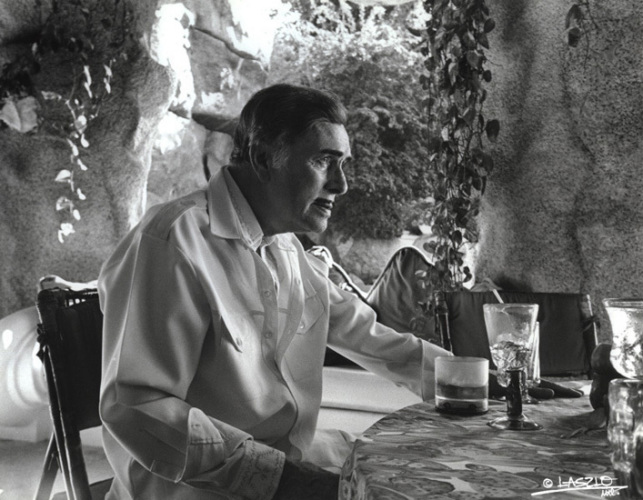
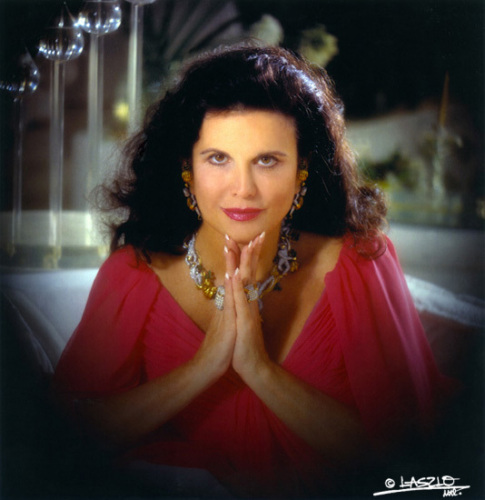
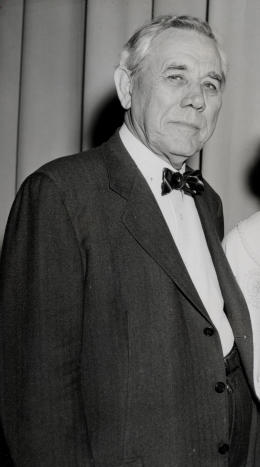
photos: above top: Ricky & Sandra Portanova in Acapulco; below top: Ricky Portanova; below center; Sandra Portanova (photos copyright www.lasziomontreal.com); below bottom H.R. Cullen Enrico Portanova’s grandfather.

“Street Bars” & Girls an Expanding Trend – Bangkok

November 21st, 2008

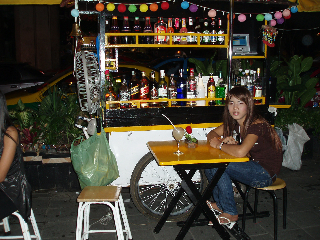
As the current Thai government tries to stifle their biggest money-making attraction for tourists, by forcing the closing hours of the bars in the entertainment areas to be earlier and earlier; the bars and the girls are fighting back by taking to the streets. The latest trend is “Street Bars”, bars on carts that appear on the sidewalks around 11p.m. and stay open as late as the last customer can lift a drink, at least until 5 in the morning. The girls, as well as “ladyboys” gravitating to these bars after the legitimate bars must close at around 1a.m., granted these creatures of the night are not the “cream of the crop” as the best have already been spoken for much earlier in the evening. The trend started in the Nana Entertainment area although I would think that it will expand into other entertainment areas, unless the powers that be, rethink their strategy and make some much needed changes in their policies. There is little control on the streets and I would imagine that to keep sex on the streets as contained as possible, the best way to do so is to keep things under one roof and more importantly, keeping it liberal instead of constraining what has always been a lively, growing, entertainment industry that contributes, in no small measure, to the coffers of the national treasury and to the economy of the country in general.

In Singapore, Lee Kuan Yew, found out the hard way that by demolishing what he considered a dreadful, sinful, disgrace (Bugis Street and other areas) he in fact, brought the tourist industry to its knees. After he realized his error, It cost him millions to rebuild what he had already torn down, and in fact, the new structures never garnered their original popularity, even to this day many, many years later.