Restaurant Fifty Three; is it The Fat Duck of Singapore? – Singapore

September 6th, 2009

53 Armenian Street
Tel: +65 6334 5535
Operating Hours:
Lunch: 12noon – 2pm (Tue-Sat)
Dinner: 7pm – 9.30pm (Mon-Sat)
Credit Cards: All Major
Prices: Very Expensive
Reservations are essential for dinner (recommended 24 hrs. advance notice for parties of two and 48 hrs. for parties of four or more and I think highly advisable for lunch).

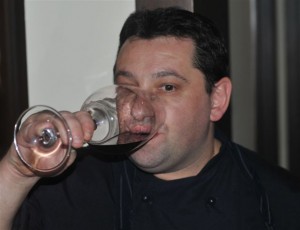
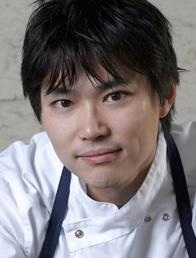
Chef Michael Han has opened Restaurant Fifty Three in a shop-house with very limited seating in Singapore, he previously worked at Heston Blumenthal’s, Fat Duck on the outskirts of London. (For the unfamiliar: this restaurant has been rated number one or two in the “World’s Best Restaurants” for a few years). He is a former law-student, which may not bode well for some patrons but hey, an attorney in the kitchen is probably better than a chef in the courtroom! Whatever. Although, reality is that one has to be concerned about the very mixed reviews from both professionals and amateurs regarding his experimental combining of ingredients that some have said, “have no friendly interactions with each other”. Remember, I said “mixed” that means; as many, and in his case more, utterances were praising the 31-year-old as were criticizing. In any case, maybe it would be prudent to wait until the dust settles before dropping the S$250 plus per head for a multi-course dinner at 53, although I imagine that the majority of you will want to see what the Hoopla is all about—now. Highlights include various renditions of David Blackmore’s Wagyu beef from Kagoshima, Mara des Bois Strawberries and Green Peppercorn. For dinner the set menu is your only choice, and I have a feeling that to encourage repeat business Chef Han will have to change the menu more often than he would normally choose to do, and with Singapore’s fairly limited selection of imported goods and domestic production at almost nil, it would probably be easier to pull rabbits out of a hat.
Bar Bambino, Italian Wine Bar – San Francisco

September 5th, 2009

Bar Bambino, San Francisco
Italian Wine Bar
2931 16th St. San Francisco 94103
(Between Mission St. & S. Van Ness Ave)
Tel. (415) 701-8466
Website: www.barbambino.com
Opening Hours:
Lunch: Tue-Sat: 11am-5pm; Dinner: Tue-Thu: 5pm-11pm Fri-Sat: 5pm-12am; Sun: 4pm-10pm
Credit Cards: All Major
Prices: Moderate

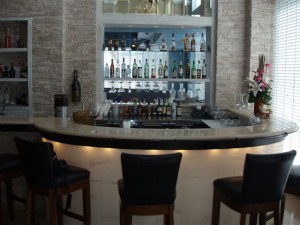
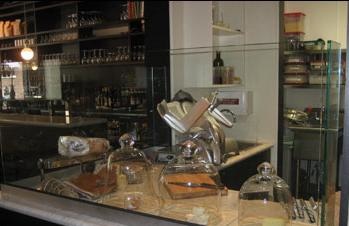
You will initially go to this small Italian Wine Bar named Bar Bambino for two reasons: a selection of 40 Italian wines by the glass and the rustic Italian-inspired cooking, that is consistently delivered by Chef Elizabeth Binder who heads up culinary endeavors, be sure to give a try to this kitchen’s version of a soupy rabbit ragu (really more like a stew) with papparadelle ($13.75).  The wine bar is owned by Christopher Losa, who is immensely environmentally aware and has a genuine interest in keeping the place directed towards organic products. Other reasons to visit that may not immediately be apparent, although situated in a run-down block of San Francisco’s Mission District it is a cozy space where people clamor to grab one of the metallic covered tables or a seat at the good-sized bar, in addition, it also boasts a heated-patio, and a salumeria that they squeezed into the already crowded space. Bar Bambino has evolved to become one of the top wine bars in the city.

Nikki Beach, Koh Samui – Thailand

September 3rd, 2009

NIKKI BEACH KOH SAMUI
96/3 Moo 2 Lipa Noi, Koh Samui, Surat Thani, Thailand 84140 • +66 (0) 77 914 500
www.nikkibeach.com/kohsamui
Bakery Café:
 Everyday 9am-6pm
Restaurant: 
Sunday – Wednesday 11am – 9:30pm
Thursday – Saturday 11am – 10:30pm 
Sunday Brunch 11am – 4pm/ A la Carte 4pm – 9:30 pm

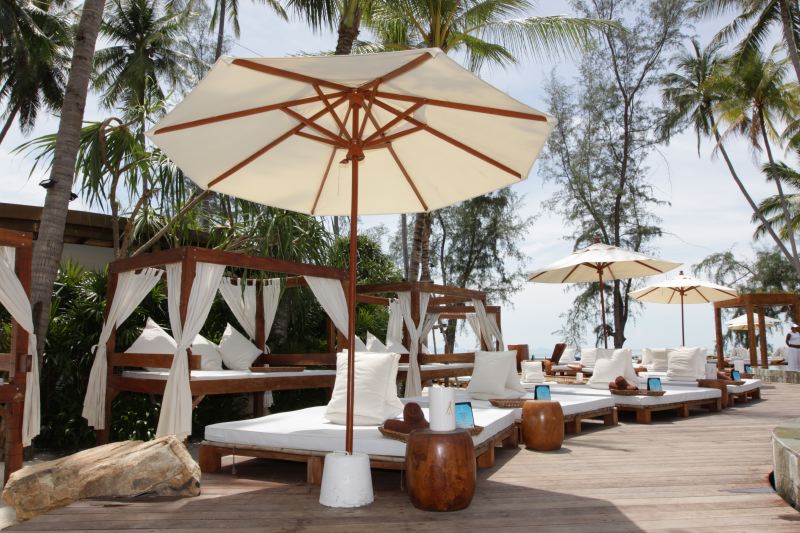
In April of 2009, Nikki Beach opened on the island of Samui on Nipa Loi Beach, in the Gulf of Thailand, and in true Nikki fashion, threw a gala “White Party”. Koh Samui’s version of now world-famed Nikki Beach was ready to introduce their brand of “beach party time” to Thailand, in spite of a deep global recession and dwindling tourist activity.


Les Papilles, Wine Bistro – Paris

September 2nd, 2009

Les Papilles
30, rue Gay-Lussac
75005 Paris
Tel. 01 43 25 20 79
Opening Hours: Monday-Saturday,10:30 a.m.-midnight. Lunch: noon-2pm; Dinner: 7:30pm-10pm Closed Sunday.
Website: www.lespapillesparis.fr
Credit Cards: Yes
Prices: Moderate

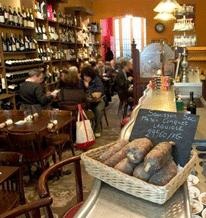
Les Papilles is a bistro combined with a retail wine store. The name means “sense of pleasurable taste” or “taste buds”, only it means more than that. The policy they are using regarding wine pricing, is a quite common and successful one that we see used more and more these days; sell the bottle at the takeaway price and add a small markup to consume it on the premises. The kitchen is serving good straightforward dishes that are visually appealing yet not frou-frou in the least.

Le Beaulieu Restaurant, By Herve Frerard – Bangkok

August 27th, 2009


Herve3

One of Bangkok’s Top French Restaurants

Le Beaulieu Restaurant
Sofitel Residence
50 Soi 19 Sukhumvit Road
Bangkok, 10110
Tel. 02-204-2004
Fax. 02-204-2005
email: info@le-beaulieu.com
Credit Cards: All Major
Prices: Expensive

drinking-bangkok-300x2301Herve Frerard photo credit: Bruno R. Ropsy

Le Beaulieu by Chef Herve Frerard is one of the top French restaurants in Bangkok, based on my frequent dining experiences there and elsewhere, although Herve claims the cuisine to be Mediterranean, with the exception of the odd pasta dish sprinkled here and there and a few recipes from Provence, it is basically mainstream French and I could not be more pleased, as at the moment we have more than enough Italian restaurants in town and not enough French to suit me.
It has a seating capacity of 45, including the small private room on the mezzanine up the stairway, a perfect size to produce the excellent cuisine that comes out of the small but well thought out and designed kitchen. The restaurant is centrally located on Sukhumvit Soi 19, just passed the first cross street turn right into the Mecure Sofitel Residence and it can be found on the ground floor. Skytrain and subway connections are within walking distance.
Turning to the cuisine, which is why you would be dining at Le Beaulieu in the first place, it is most often excellent; and following are just a few highlights:
Dinner starter: Parmentier of Roasted Frog Legs and Baby Leeks, Lentil broth, garlic and fresh chervil 480; Snail Lasagna and Poultry Breast, Spinach shoots and green tomato syrup 420;
 Dinner main course: Braised Veal Cheek Cooked in Merlot Wine and Old Port, Celeriac purée, black olives and sun dried tomatoes 950
; Chefs Specialties: Roasted French Bresse Pigeon, Cépes mushrooms and braised endives, orange bitter condiment 2000; 
Soup: Artichoke Soup & Half-Grilled Violet Artichoke, white truffle foam 390.

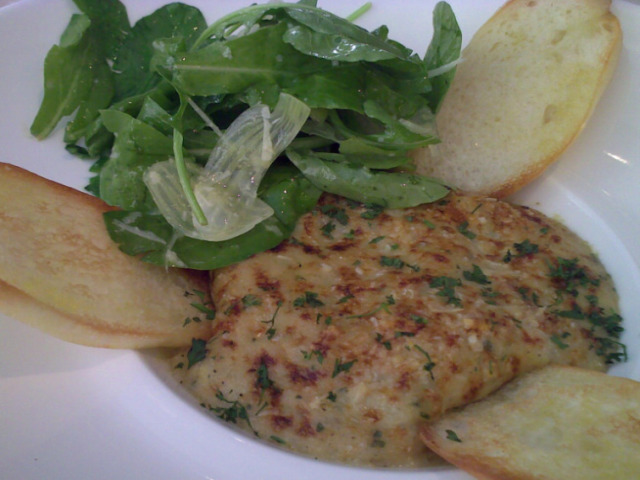
Brandade at Le Beaulieu, Bangkok (photo image: restaurantdiningcritiques.com)Above: Brandade de Morue a new plat du jour at Le Beaulieu
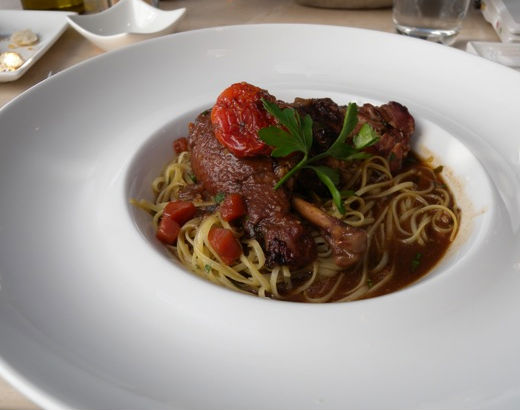
Coq au Vin 2 (image credit: restaurantdiningcritiques.com)Above: Coq au Vin, Le Beaulieu

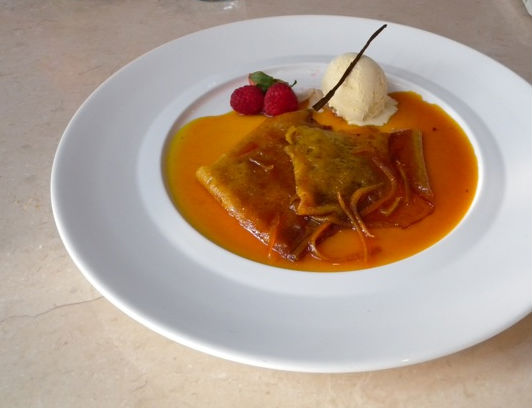
Crepe Suzette, Le Beaulieu (image credit: restaurantdiningcritiques.com)Crêpe Suzette, Le Beaulieu
Business Lunch Three Courses 525++ or Executive Lunch Three Courses 825 ++
  For instance they might feature: Starter: Fresh Japanese Scallops and Sea Urchin, Celeriac purée
 Main: Traditional Australian Beef Tartar, sautéed baby potatoes and rocket salad;
 Coq au Vin made with Merlot wine. There are many other classic dishes that change on a weekly basis.
For dessert give the Traditional Chocolate Mousse with whipped vanilla cream a try. It is the best rendition available in the city. They use the Doi Inthanon vanilla beans from the north of Thailand in all the vanilla sauces and vanilla ice cream. Chef Herve is a vanilla devotee as I am. Another excellent dessert is the Rum Baba with Chibousi cream and Pacojet vanilla ice cream, made with plenty of good Rum from Martinique.
I have sampled Herve’s cuisine in a couple of other restaurants in Bangkok in the past. The cooking in those operations, for whatever reasons, were not in the same league with the outstanding fare he is presently offering at Le Beaulieu.

Demonia – Bangkok

August 27th, 2009

Demonia Bangkok
12/34 Sukhumvit Road soi 33
Bangkok 10110
Tel: 022589963
E-mail: welcome@demoniabangkok.com

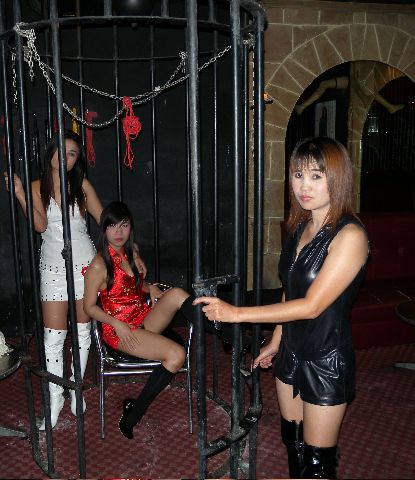
Demonia on Sukhumvit Soi 33 is a club featuring well-trained ladies who will accommodate fetishes, BDSM, the bizarre, the imaginative and the erotic for men, women and couples. It is visited mainly by Europeans and Japanese. I have recently noticed that a few of this type of club have sprung up around Bangkok, although I am told by aficionados that Demonia is the best.


料金とスケジュール
ディーモニア税

メンバー 
1年間カード15,000バーツ
メンバー特典: 
お好みのプレミアムスピリッツを一本、プラス氷とミキサーまたはビール2ダースを  
プレゼント 
一杯目のドリンクを450バーツにて 
その次のドリンクは150バーツで 
お好みのボトルを3,500バーツにて 
女性用ドリンクは20%

毎日午後5時半より午前01:00まで営業  
ドレスコード(服装):ブラック(黒色)
メンバー(会員)
一杯目のドリンクを450バーツにて 
その次のドリンクは150バーツで
お好みのボトルを3,500バーツにて

非会員

一杯目のドリンクは900バーツ 
その次のドリンクは300バーツ 
お好みのボトルは7,000バーツ
女性用ドリンク  
250バーツ

PRICES:

NON MEMBER

First drink B 900.00
Following drinks at B 300.00 each
Bottle of your choice B 7,000.00

MEMBERS

First drink B 450.00
Following drinks at B 150.00
Bottle of your choice B 3,500.00

3 MONTHS MEMBERSHIP includes 1 Bottle of Premium Spirit or 1 Bottle of Fine Wine or 18 Bottles of Beer. (Cost B 8,000)
Following drinks are priced at 50% discount.

1 YEAR MEMBERSHIP includes 2 Bottles of Premium Spirit or 2 Bottles of fine Wine or 36 Bottles of Beer
Following drinks are priced at 50% discount.

PROMOTION IN SEPTEMBER 09 : WE SERVE GREEN LABEL WHISKY INSTEAD OF PREMIUM WHISKY

PACKAGES : 1 Lady including bar fine, Lady tip, Private area ( in the club or in an adjacent hotel room at your choice ) = B 3,000.
2 Ladies including bar fine , Ladies tips, Private area = B 5,000

LADY DRINK
B 250.00

Bar fine: B 1,500 + tip for lady to be discussed directly with her.

Chinese Mooncake Festival – Bangkok

August 27th, 2009

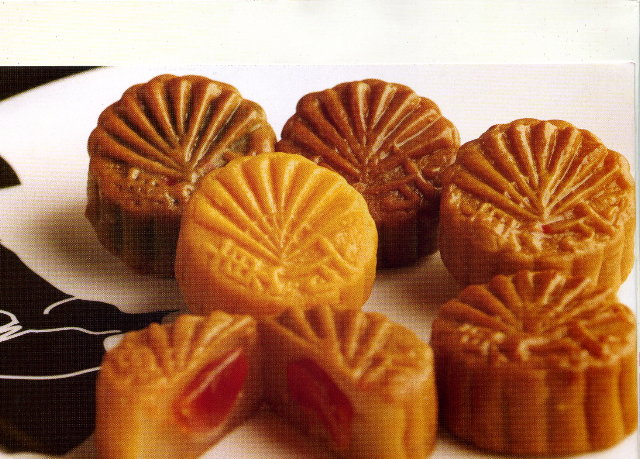
Chinese Mooncake Festival 21 August – 3 September 2009

428 Baht per box with quantity discounts available: Call for information Tel. +66 (2) 659 9000 ext. 6812-13, Fax. +66 (2) 267 8071.

The Martini – Recipe

August 27th, 2009

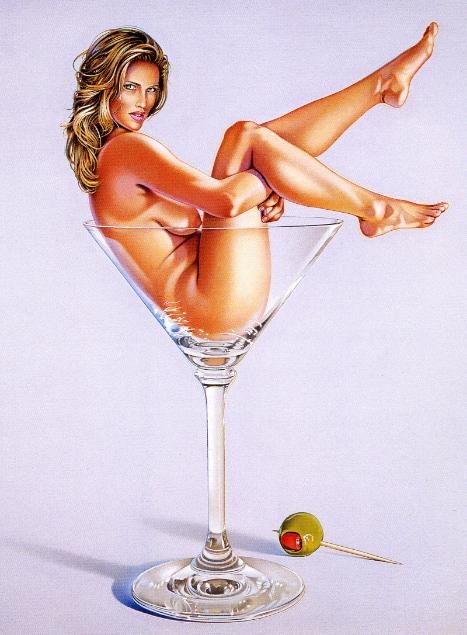
Above: Mel Ramos, Martini Miss, 1993, oil on linen, 64 x 48 in., (Modernism Gallery, San Francisco)

The Classic Martini Recipe (there are many and this is mine):

3 oz. of the finest gin (classic) or vodka (your choice).

In America, I never put any vermouth in the drink, as customers would always complain that it was “not dry enough” with even the smallest addition of vermouth. Either wash out the glass with vermouth and discard it or just add a few drops of vermouth; this is probably the best compromise in these times where “dry” is so important even though, the original recipe called for a great deal more. Use your own judgment.

Pre-chill the glasses with ice and discarding it just previously to pouring the Martini Cocktail into them.

Fill a large glass container with the best quality ice as it will hold. (it means no tap water or ice-machine varieties; only ice made from pure water) I buy Japanese ice from Mount Fuji.

Stir using a long bar spoon and stir with a swirling motion as well as a swift upwards/downwards motion (this creates fragments of ice to break-off from the larger pieces of ice) and if you have accomplished this you will see tiny fragments of ice floating on the top of the drink when it is poured into the Martini glass.

You may use a small or large Martini glass, this is entirely up to you, but it must be the classic Martini glass.

Strain the mixture from the container into the chilled glass shaking vigorously to remove all fragments of ice into the drink.

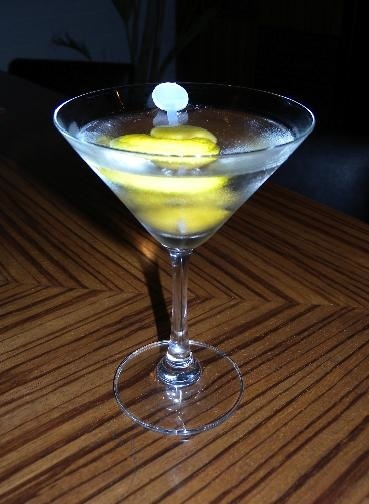
Garnish with finest Italian green olives stuffed or not (preferably not), or a lemon twist this is up to your personal preference.

Cheers!

Following are some of my favorite Martini quotes:

Robert Benchley, a featured player was in and out of the water tank all day while filming the MGM classic China Seas, starring Clark Gable and Jean Harlow. When he was finally allowed to climb out of the tank he reputedly announced, “I must get out of these wet clothes and into a dry Martini.” Another rendition follows: Robert Benchley’s famous line delivered to Ginger Rogers in the film “The Major and the Minor”, “Why don’t you get out of that wet coat and into a dry martini?”

“One martini is all right. Two are too many, and three are not enough.”
James Thurber

I like to have a Martini

Two at the very most—

After three I’m under the table,

After four I’m under my host.

Dorothy Parker

“A Drink with Something in It”

There is something about a Martini,

A tingle remarkably pleasant,

A yellow, a mellow Martini;

I wish I had one at present.

There is something about a Martini,

Ere the dining and dancing begin,

And to tell you the truth,

It is not the vermouth—

I think that perhaps it’s the gin.

Ogden Nash

An Excerpt from  “To the Gibson and Beyond”

By M.F.K. Fisher

The first Martini I ever drank was strictly medicinal, for threatened seasickness, and in spite of a loyal enjoyment of them which may be increasing in direct ratio to my dwindling selectivity of palate, I must admit I still find them a sure prop to my flagging spirits, my tired or queasy body, even my over-timid social self. I think I know how many to drink, and when, and where, as well as why; and if I have acted properly and heeded all my physical and mental reactions to them, I have been the winner in many an otherwise lost bout with everything from boredom to plain funk. A well-made dry Martini or Gibson, correctly chilled and nicely served, has been more often my true friend than any two-legged creature.

Music Station Bar – Bangkok

August 26th, 2009

7/8-9 Sukhumvit Soi 33
Bangkok, 10110
Tel. 02 662 2810

A friendly new music bar on Soi 33! Offering live music, a long bar, and pool tables. I have listened to some good vocalists, especially the female singer, they were backed up by a lively band. There are many potential female companions available and they are not overly aggressive, although if you wish, they will do their best to keep you entertained with light conversation, especially if you buy them a drink, and as I said, they do not ask for it, and rather wait for you to offer.

Château Chalon and the Jura

August 23rd, 2009

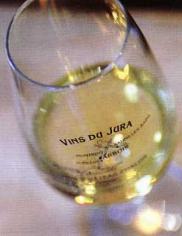
Château Chalon, is not really my style of wine, nor even close. A protective blanket of yeasts or voile that rests on top of the wine, while partly protecting it at the same time allows oxidation and it imparts a strange nutty, salty character. This element gives these wines a difference and sets them apart from ordinary wine. From my standpoint, I am extremely sensitive to the slightest oxidation that occurs in open wine that is coming down from its peak, and over-oxidation would, well . . . turn me off, altogether. I remember vaguely that my first encounter with this type of wine was in a Michelin-starred restaurant in the Franche-Comté, while traveling from France to Switzerland, and I believe, the second experience was when I dined over a period of time at the restaurant Chez Maitre Paul, 12 Rue Monsieur Le Prince, Paris, where I enjoyed a chicken with a sauce made with vin jaune. When I first ordered a bottle of the local wine the waiter warned me that most customers, including his French guests, did not enjoy these wines. They are different he stressed.
Why then am I writing about it? And why are sommeliers and others in the trade going bonkers for it? This is because they are different and that is in itself is interesting even though, these wines are not my personal favorites. However, no matter what I think; there is a source for them by following this link: http://www.chateauchalon.com/ also note that they have quite an excellent selection of Absinthe at this page: http://www.absintheclassics.com/ In addition you can take a look at my previous post about absinthe: http://restaurant.kitmarshal.site/wp-admin/post.php?action=edit&post=81

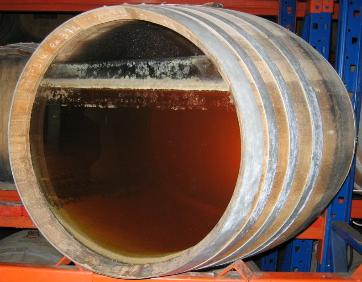
The wine comes from a minuscule appellation in France’s Jura region devoted to the production of vin jaune. It is a grape that turns deep yellow as it ages for years in wooden barrels that are filled only partway. The oxygen that gets into the barrels would turn most wines to vinegar, but vin jaune survives due to the aforementioned voile. It is illegal to be imported into the United States due to the odd-sized bottle, which is only 620 ml. The illegal part is the short, squat bottle traditional to the area that holds only 620 ml. In the U.S., and only standard bottle sizes, such as 375ml, 750 ml and larger (magnum, jeraboam etc.), are recognized. and unfortunately, not 620 ml.

“Jean Berthet-Bondet is a producer of these wines made in an oxidized style, although not all of his wines are made in this way; it turns out that he also makes a bright, yeasty, mineral-laden Chardonnay and a sharp, light red from a blend of the local Trousseau, Poulsard, and Pinot Noir, both of which are entirely legal. He also makes a blend of Chardonnay and Savagnin that is aged for just two years or under and tastes like salted caramel. These wines go well with smoked fish, or white meat in a cream sauce and also with dishes made with frogs, as they have an abundance in Franche-Comté.”

The Franche-Comté is called the Jura often as not, and the two names are used interchangeably. This is the land of Gruyère cheese, and the people of the Jura were making it centuries before the Swiss were. It is a Herculean job but it is worth the effort, for when they finally wrench it from the earth, they have the gentian root, an aromatic substance which, distilled, forms the basis for many a liqueur and apéritif including the popular Suze. Absinthe plants abound in these hills, also, and it is not surprising to learn that this is the home of Pernod. The banks of those lakes and streams are inhabited with frogs. Frogs’ legs are a subtle delicacy awaiting in many country inns. There is also fish stew, filled with undertones of flavor—white wine, herbs, spices, small onions, and mushrooms. Called i matelote, a pochouse, or a meurette, it doesn’t matter. He should have subtlety, savor, and seductiveness. Tench, carp, perch, eel, and pike will all contribute to his happiness. And there are a dozen of dry white wines of the province to act as companions.

“Château Chalon is only for special occasions”, Mr. Berthet-Bondet says. “There simply isn’t much of it with only 136 acres specified for its production. And it takes ages for the wine to realize its full potential”.